The problem
EO's design work crosses teams, formats, and time zones. Ambiguous requests consume time before design starts; repeated motion work can become a new file for every editor; and a decision made in a call disappears when the next person takes over. A small team needs an operating system that makes ownership visible.
The call
I argued for a distinct design team and became its lead when it was announced in February 2026. The working remit spans Seoul, San Francisco, and Ho Chi Minh City; those are the locations in my design work, not a complete count of EO offices. With two in-house designers and a freelance roster in the documented 2026 period, I had to decide which work stayed in-house, what could be handed to a specialist, and what the receiving person needed to know.
When an additional hire was not available in April, I expanded the trusted freelance path. On the May client slate, Doyeon and Izzy worked on UI motion for a TwelveLabs sizzle, while Soyoung took a technical deep dive that could reuse motion decisions. Kalshi and Attio were sequenced around that capacity. Those are allocation decisions and team credits, not files I made alone.
The system
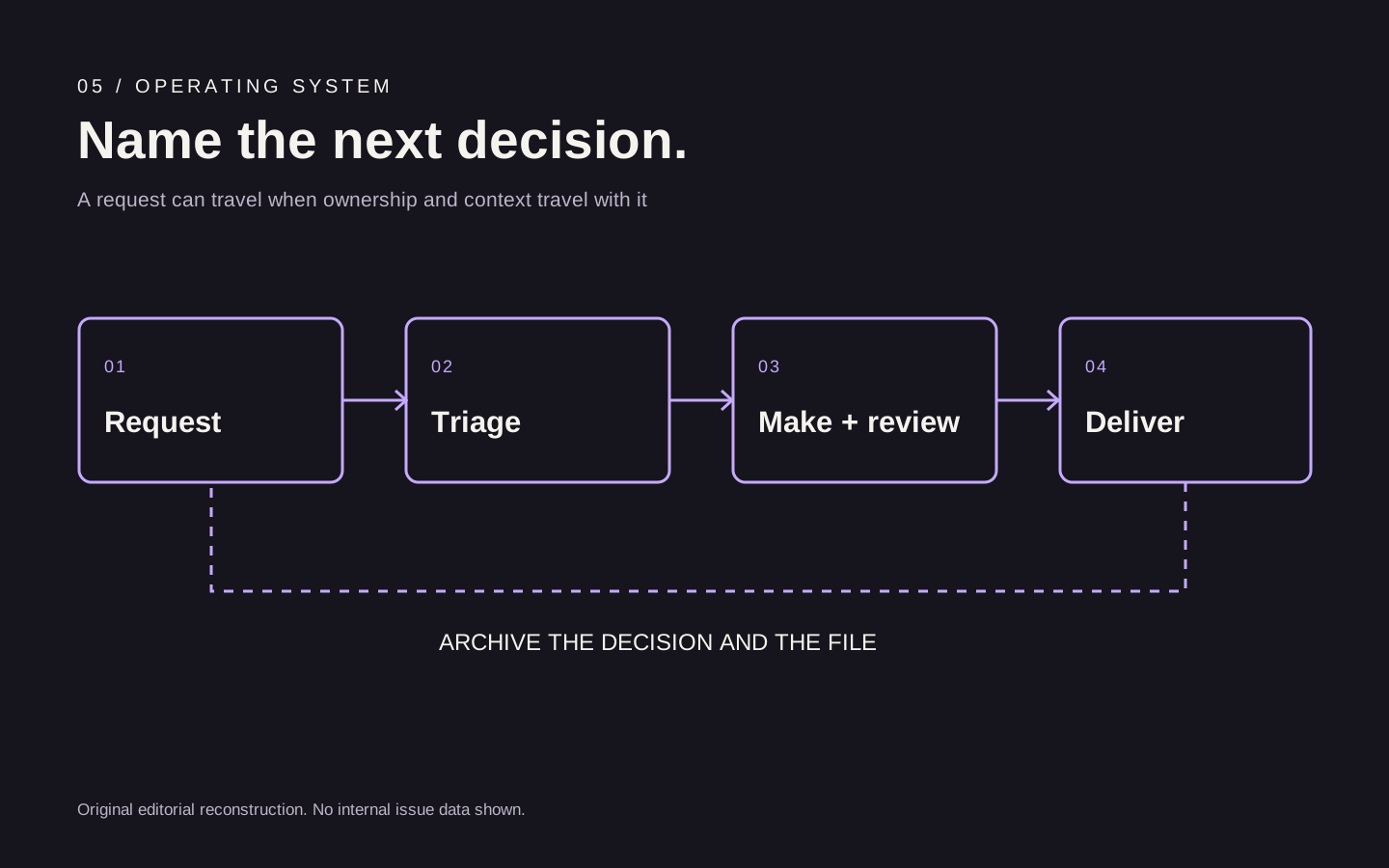
- 01Request with scope and deadline
- 02Triage and name an owner
- 03Reuse a guide or template
- 04Review the decision
- 05Deliver and archive
I published a Linear project taxonomy so a finite client workstream and a recurring publishing stream could both be found. Intake can open a pre-filled issue with deadline context; an archive makes a published asset available to the next maker. The operating rule is to document the next decision, not every conversation.
The EO School global motion package gives a concrete reusable example: I converted a Final Cut preset set into an EO-branded Apple Motion template and wrote a usage guide for the Vietnam editing team. Other records mention a Motion Master file and planned After Effects templates. That evidence does not establish a shipped MOGRT system or its adoption, so MOGRT remains a proof gap rather than a renamed older template.
In the world
Vendor work followed an in-house guide and external execution model, with written scope, revision boundaries, and a handoff that could be read without another meeting. The team and collaborators made the assets; my role was to allocate, brief, review, and unblock. The requested Lightspeed partnership is still a user-supplied lead without confirmed scope or public clearance and is excluded from the delivered-work claims here.
Outcome
The dated records support a team structure, a request taxonomy, a reusable motion package, and examples of production allocation. They do not yet quantify turnaround or the share of requests handled without a designer. The numbers below remain open until a comparable period and definition are available.
[[METRIC: design request turnaround]] [[METRIC: self-serve request share]]What I'd tell another designer
Document the decision someone needs to make next. A template helps only when its owner, limits, and handoff are clear.